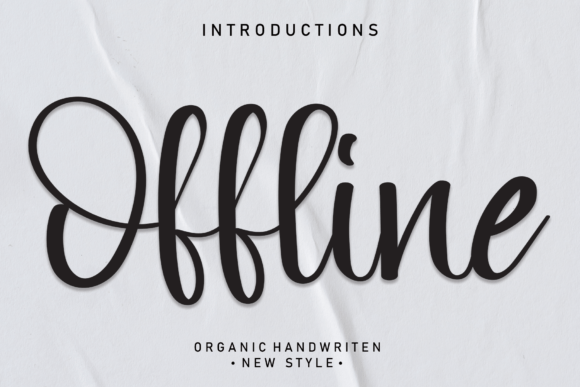
Offline: A Handwritten Font That Brings Charm to Every Craft and Product Design
As I sat at my desk last week, adjusting the text on a candle label mockup, I knew the font had to feel warm and personal. The scent was lavender vanilla—cozy and inviting—so the typography needed to match. That’s when I opened the Offline font and typed out “Relax & Breathe.” The soft curves, the slight bounce in the letters, and that friendly rhythm made the design feel instantly authentic. It was one of those small but meaningful moments where the right font just clicks.
Offline is a Script Amp font that reads like a handwritten note from a friend. It’s not overly formal or too loose—it lands somewhere in the sweet spot between playful and polished. Whether you’re designing greeting cards for a seasonal market or printing tags for your handmade soap bars, Offline brings a personal, approachable vibe that customers respond to. It’s the kind of typeface that works well across both digital and physical products, from printable wall art to boutique packaging.
Why Offline Works for Real Handmade Sellers and Print Creators
I’ve used Offline for everything from wedding welcome signs to digital planner pages, and each time, it adds a sense of warmth and craftsmanship. When I designed a set of holiday gift tags for my Etsy shop, I wanted something that felt handmade but still clean enough to print clearly on small stickers. Offline handled both the short phrases like “To: Mom” and longer custom names with ease. The font has a consistent baseline and spacing that makes it surprisingly readable, even at smaller sizes.
One of the standout features of Offline is its versatility. It’s a display font by nature, best suited for titles, names, and short phrases, but it holds up well in a variety of formats. Whether you're cutting it on a Cricut for a farmhouse-style wall sign or using it in a digital download preview for a social media post, Offline maintains its character without losing clarity.
From Labels to Logos: Creative Uses for Offline
Let’s talk about how Offline can elevate your product designs:
- Candle Labels: Perfect for adding a soft, inviting tone to natural soy candles. Try pairing it with a clean sans-serif for the scent name.
- Greeting Cards: Whether it’s a birthday card or a thank-you note, Offline makes handwriting feel intentional and elegant.
- Wedding Stationery: Use it for names on save-the-dates or as the main font on a rustic welcome board.
- Printable Wall Art: From minimalist quotes to nursery art, Offline brings a gentle, human touch.
- Boutique Tags: Ideal for clothing tags, gift tags, or packaging labels where a personal feel is key.
What I love most is how Offline works in both color and black-and-white designs. I recently created a set of digital quote cards for a client, and the font looked just as charming in a soft watercolor background as it did on a clean white PDF. It adapts well without losing its personality, which is a big plus when you’re creating templates that others will customize.
Pairing Offline with Other Fonts for Balanced Design
Like most script fonts, Offline shines brightest when paired with a more structured typeface. For example, when designing a set of planner stickers for bullet journaling, I used Offline for the main title like “Gratitude List” and paired it with a simple sans-serif for the bullet points. This contrast helps guide the eye and makes the design feel intentional and organized.
Here are a few pairings I’ve found work well in real product mockups:
- With a Modern Sans Serif: Great for digital templates, shop branding, and editorial-style printables.
- With a Classic Serif: Ideal for wedding invitations or vintage-inspired packaging.
- With a Bold Display Font: Use Offline for names or quotes and a bold font for headings or accents.
Design Tips for Using Offline in Physical and Digital Products
When using Offline for cutting machines like Cricut or Silhouette, always check the spacing and letter connections. Some handwritten fonts can have overlapping strokes that cause issues during cutting. Offline is designed with just enough bounce and flow without being overly connected, so it works well for both vinyl and paper projects.
For printed products like greeting cards or packaging labels, test the font at different sizes. While it’s not ideal for long paragraphs, it reads clearly even at 10pt when used for short phrases or titles. I always preview my designs in both digital and print format to ensure legibility, especially when using it for product tags or small stickers.
What to Check Before Selling with Offline
Before using Offline in your commercial products—whether it’s SVG files for Cricut users, printable templates, or physical merchandise—make sure to review the licensing terms. Most premium fonts like Offline come with commercial use rights, but it’s always good to double-check what’s allowed. Some licenses may restrict how you distribute the font itself, so it’s best to use it as a rendered image in digital files or embedded in PDFs rather than including the font file.
Also, look into the included styles and alternates. Offline often comes with swashes, ligatures, and multiple weights, which can be a big help when designing for different applications. If you’re creating multilingual products, check for language support to ensure the font covers the necessary characters.
Bringing Personality to Your Shop with Offline
In my experience, the right font can make a subtle but powerful difference in how your products are perceived. Offline brings a sense of authenticity and warmth that’s hard to replicate with generic fonts. Whether you're a digital creator, a paper crafter, or a small shop owner, this handwritten Script Amp font adds a human touch that resonates with customers.
From seasonal tags to digital downloads, Offline has become a go-to in my design toolkit. It’s not just a font—it’s a design companion that helps bring handmade charm to every project, one letter at a time.